
Skin Health · Body Odor
5 Reasons That Musty “Old Person” Smell Keeps Coming Back on Your Clothes — and the One Change Dermatologists Recommend to Stop It

Last updated June 2026 · 6 min read
If you’ve noticed a faint, musty smell, you’re not imagining it — and it isn’t poor hygiene. After 50, everyone’s skin makes a greasy compound called 2-nonenal that regular soap can’t remove, so it lingers on skin and clothes no matter how often you wash. The one thing that actually breaks it down is Japanese persimmon — and our pick is OKARI.
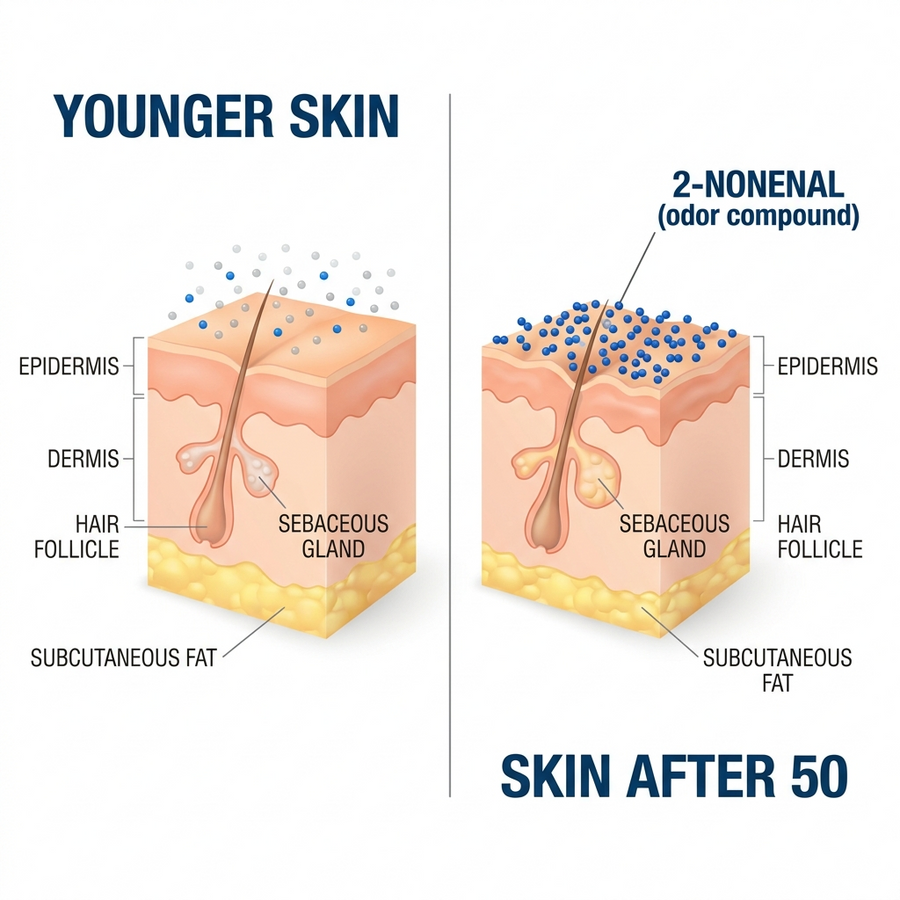
1It’s Not Hygiene — It’s a Compound Called Nonenal
That musty, greasy scent isn’t dirt. After 50, your skin’s antioxidant defenses drop and its natural oils oxidize into a compound called 2-nonenal — the documented cause of “old person” smell. It can appear in someone cleaner than ever, which is exactly why scrubbing harder never helps.
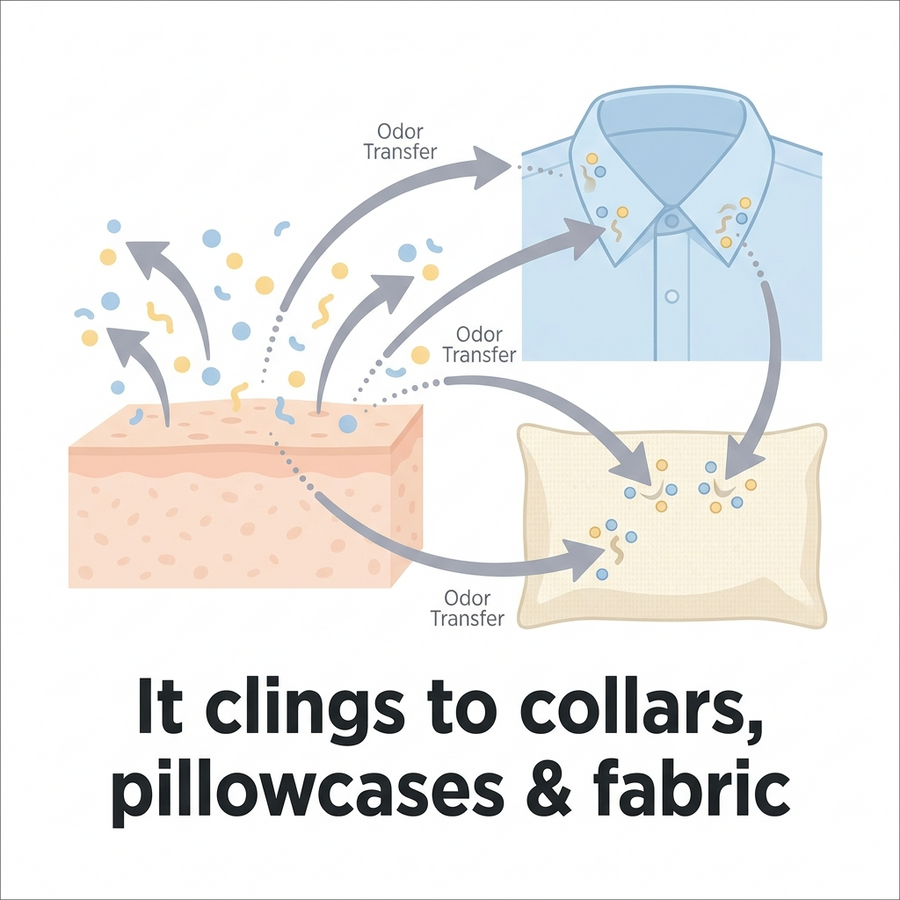
2It Seeps Into Your Clothes, Bedding and Fabrics
Because nonenal is oily, it doesn’t rinse away — it transfers and clings. To collars, pillowcases, the car seat, the favorite chair. It builds in fabric over time, so even freshly showered you can carry it into a room. That’s why it keeps coming back no matter how often you wash.
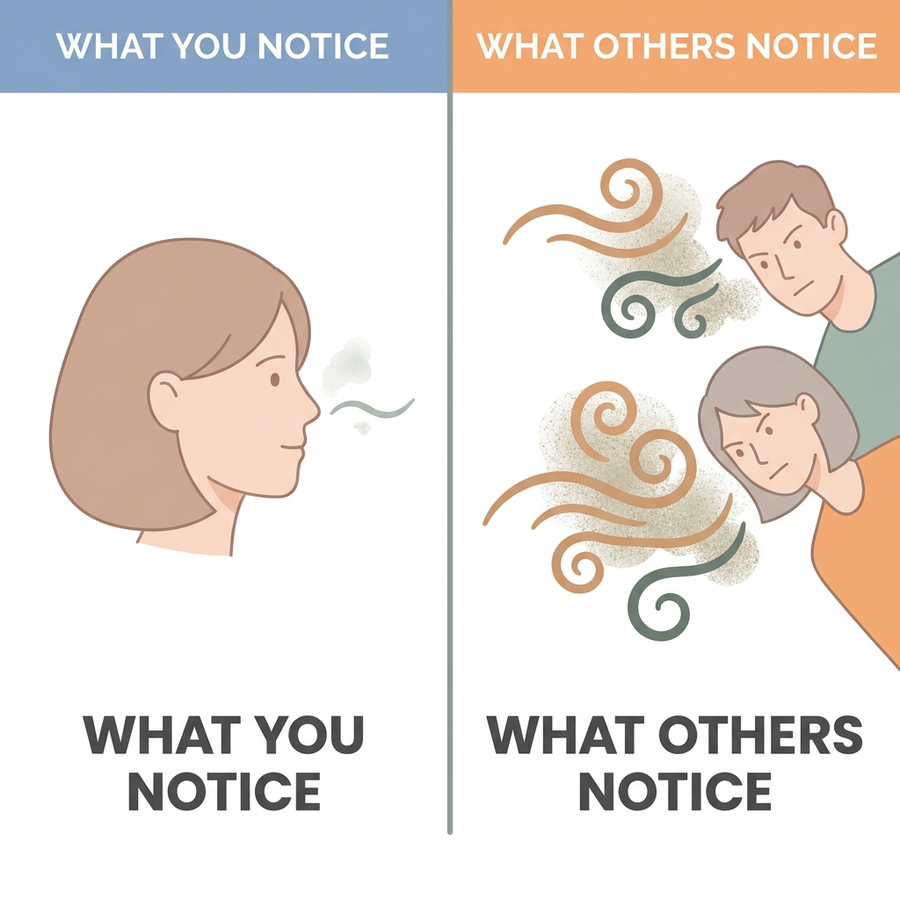
3By the Time You Catch a Hint, It’s Far Stronger to Everyone Else
Your nose adapts to your own smell, so you go “nose-blind” to it within minutes. Here’s the hard part: if you can catch even a faint whiff of it yourself, it’s far more noticeable to the people leaning in to hug you. They notice first — and they almost never say a word.
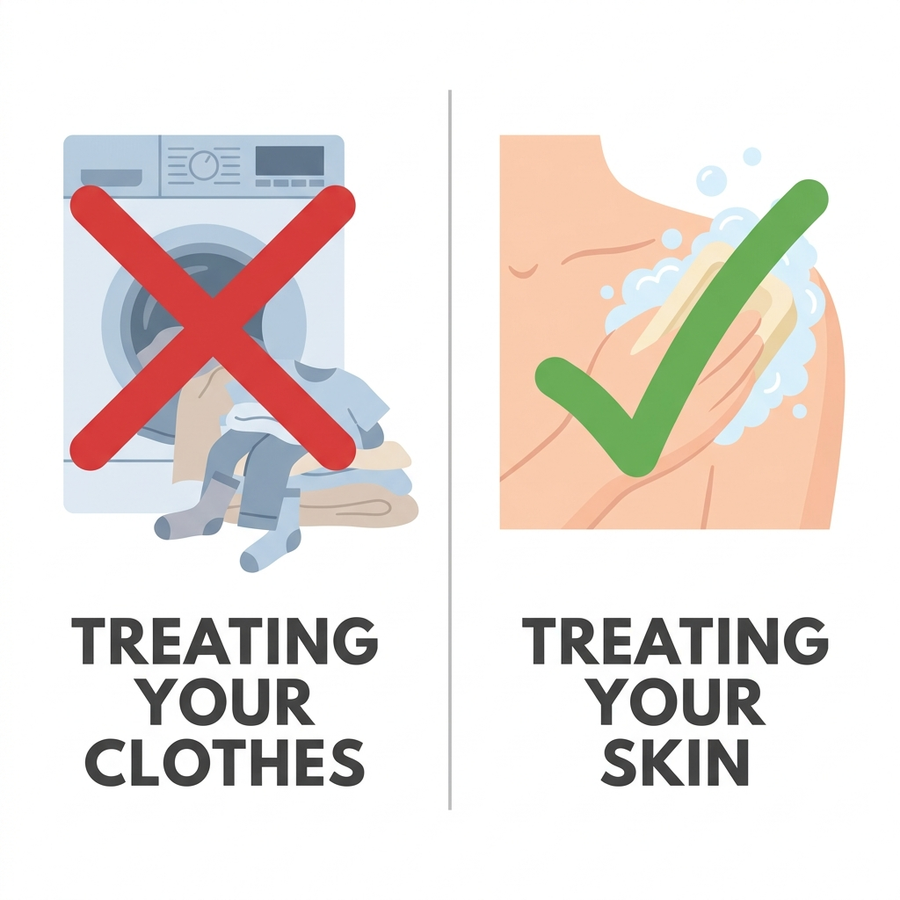
4You’ve Been Focusing on the Wrong Thing
Most people attack their clothes — stronger detergent, more washes, longer showers. But the nonenal is produced on your skin, and it reappears the moment you put clean clothes back on. Treat the laundry and you’ll chase it forever. The source was never the fabric.
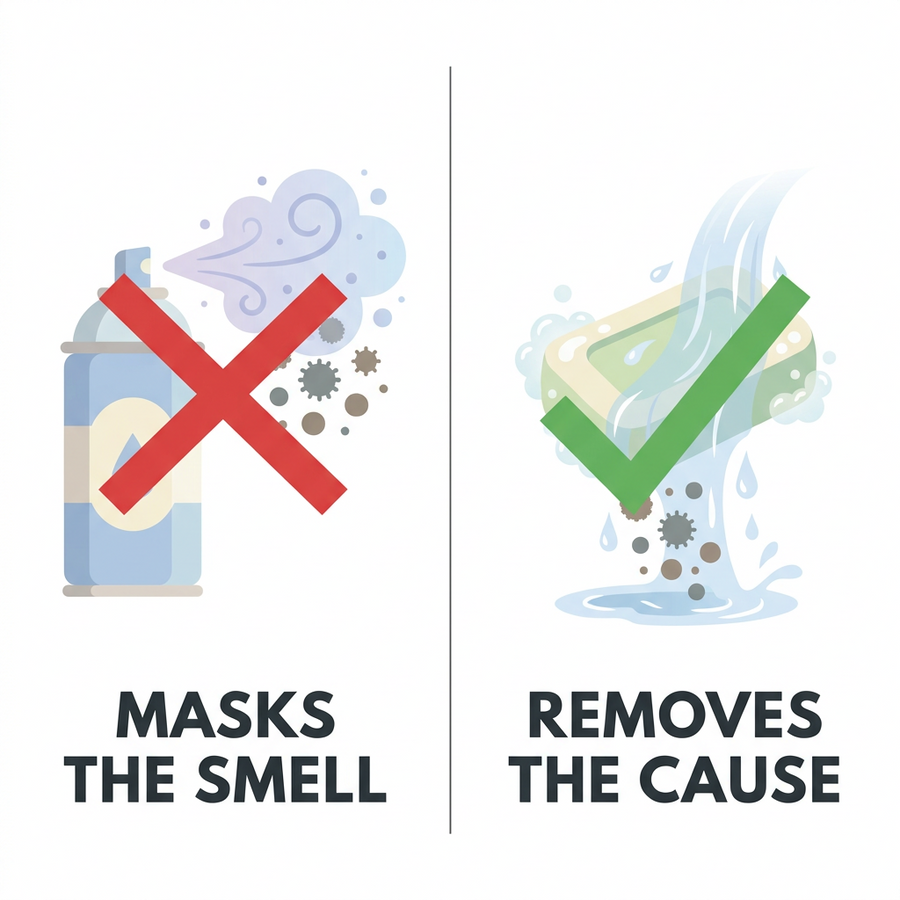
5Soaps and Fragrances Only Mask It — Temporarily
Ordinary soap can’t break down an oil-bound compound, and perfume or deodorant just blanket it for an hour before it bleeds back through, sometimes stronger. Masking the smell has never been the same as removing it — which is why nothing in your bathroom has lasted.
So What Can You Actually Do About It?
To stop it for good, you have to get rid of the 2-nonenal build-up on your skin — not cover it up, and not keep re-washing your clothes.
That’s where persimmon comes in. Japan has used persimmon — yes, the fruit — to handle this exact smell for over a hundred years. Here’s the simple version of why it works when soap doesn’t:
The smell comes from a bit of greasy residue (nonenal) sitting on your skin. Regular soap can’t grab hold of it — it slides right past, the way water beads off a greasy pan. Persimmon is different. It works like a magnet for that greasy residue: it grabs on, holds tight, and washes the whole thing away down the drain.
And this isn’t folklore — it’s been measured:
- Japanese researchers first identified the compound in a 2001 study in the Journal of Investigative Dermatology, finding 2-nonenal in body odor only in people aged 50 and over — and rising with age.1
- In a separate 4-week study, people who washed daily with a persimmon soap had significantly less 2-nonenal on their skin, with a measurable drop in odor.2
So you’re not masking the smell or scrubbing at it — you’re actually removing what causes it. And once it’s gone from your skin, there’s nothing left to drift onto your collar, your pillow, or the people around you.
That’s the one change dermatologists keep pointing to: it’s the only thing that takes away the cause — instead of just hiding it.
References. 1 Haze S. et al. “2-Nonenal newly found in human body odor tends to increase with aging.” Journal of Investigative Dermatology, 2001. 2 Clinical evaluation of a persimmon-tannin cleansing soap over 4 weeks of daily use.
What to Look For When Buying a Persimmon Soap
Not all of them are equal. Before you buy, check four things:
- ✓ Real, 5% concentrated persimmon — plus skin-loving extras. The tannin has to be genuine persimmon, not a trace splash. The best bars also add collagen, hyaluronic acid and green-tea antioxidants so they cleanse gently instead of stripping mature skin.
- ✓ The right price — beware both extremes. Authentic imported bars can run around $50 a month, putting the real fix out of reach. But ultra-cheap “persimmon” soaps often contain almost none of the active — so they barely work. You want real persimmon at an everyday price.
- ✓ Expert backing. Look for a soap recommended by dermatologists — a sign the formula does what it claims, gently enough for daily use.
- ✓ A money-back guarantee. A real guarantee tells you the maker stands behind it — if a company is confident enough to refund you when it doesn’t work, that’s a good sign it does.
Run those four checks and most products fall away fast. Here is the one that passed every test in our expert review.
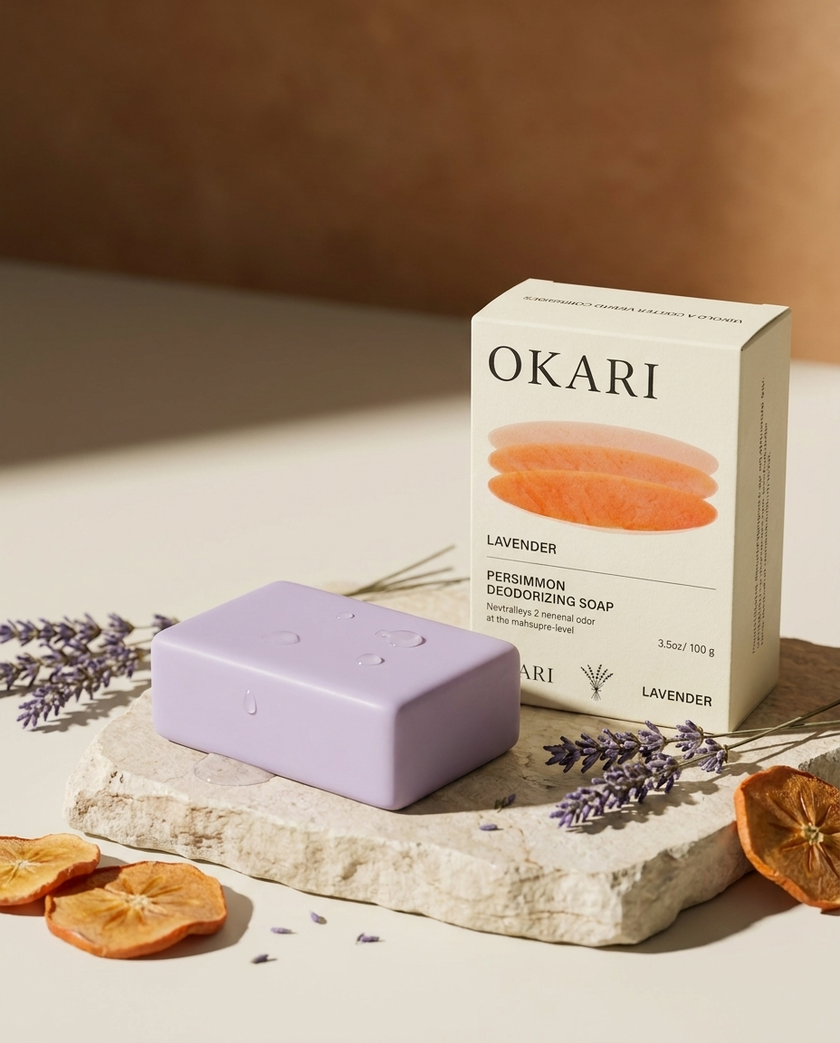
- ✓ Real, concentrated Japanese persimmon tannin Neutralizes nonenal at the source — not a cover-up.
- ✓ Collagen + hyaluronic acid + green tea Cares for mature skin instead of stripping it.
- ✓ Dermatologist-recommended Gentle enough for daily use, on face and body.
- ✓ An everyday price Not a $50 import — and not a no-persimmon knockoff.
All in a single bar you swap for the soap you already use. No new routine. Lather, rinse, done.